2026-10-10 ·
Why Does My Roof Leak When It Rains Hard (But Not in Light Rain)?
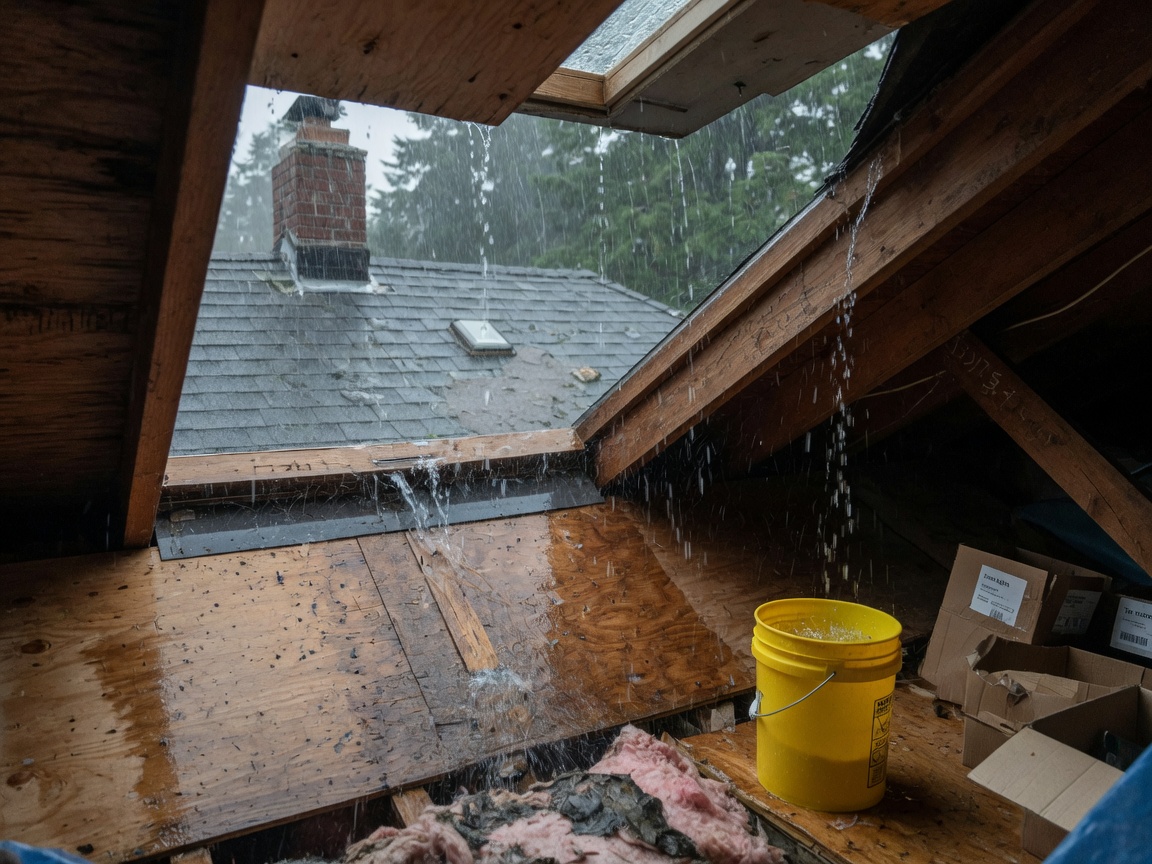
Bellingham roofs leak during hard rain because the increased water volume forces its way through small gaps in flashing, cracked shingles, or clogged gutters that stay dry under light showers. These defects sit above the leak point until saturation occurs, typically after 0.5 inches of rain per hour. In Whatcom County the pattern repeats each winter when storms roll in from Bellingham Bay.
Why Heavy Rain Reveals Hidden Defects
Most homes in Downtown Bellingham, York, and Happy Valley were built between 1920 and 1970 with asphalt shingles now 15–25 years old. Light rain runs off the surface, but sustained heavy rain backs up under lifted edges or around nail holes. The same pattern appears in Fairhaven’s older stock where original flashing has corroded. Once water finds the path it travels along sheathing seams until it reaches an interior ceiling. Wind-driven rain common near the Canadian border pushes water farther under these openings than calm showers ever do.
Local Weather Patterns That Trigger Leaks
Whatcom County receives most of its 35–40 inches of annual rain between October and March in short, intense bursts rather than steady drizzle. These bursts overwhelm 2–3 inch gaps at skylights or vent boots before the water can evaporate. Comfortable summer months lull owners into skipping inspections, so debris from nearby Whatcom Falls Park trees stays in gutters until the first November storm. Homes on Sehome Hill and Cornwall Park slopes see extra runoff that concentrates at eaves, turning minor seam separations into active leaks only when rainfall exceeds one inch per hour.
How Gutters and Flashing Fail Under Load
Clogged gutters on homes in Barkley and Alabama Hill back water under the first course of shingles once flow exceeds gutter capacity. Standard 5-inch gutters in these neighborhoods often collect maple leaves that reduce effective drainage by half. Step flashing around chimneys in older Downtown Bellingham properties separates after repeated freeze-thaw cycles, creating 1/8-inch openings that only heavy rain exploits. Replacing or resealing these spots stops the selective leaking without full roof replacement.
A professional roof leak detection & inspection pinpoints the exact entry points before winter storms return. Owners in Lynden and Ferndale facing the same issue often schedule this service after the first hard rain of the season.
Practical Next Steps for Bellingham Homeowners
Start by checking gutters and downspouts after any rain over 0.5 inches per hour. Look for water stains on ceilings in rooms below roof valleys or skylights. If stains appear only after heavy rain, schedule emergency roof leak repair before the next storm to prevent interior damage. Many residents in Blaine and Everson combine this with the Bellingham Seasonal Roof Maintenance Checklist (Spring/Fall) to clear debris and re-seal flashing proactively. Review the Roof Leak Repair Cost in Bellingham (2026 Price Guide) for current pricing ranges on flashing work versus full section replacement so you can budget accurately.
Addressing these pressure-point failures now keeps minor defects from becoming major interior repairs during the next Whatcom County wet season.