2026-10-10 ·
Attic Water Stains? How to Trace the Leak to Its Source
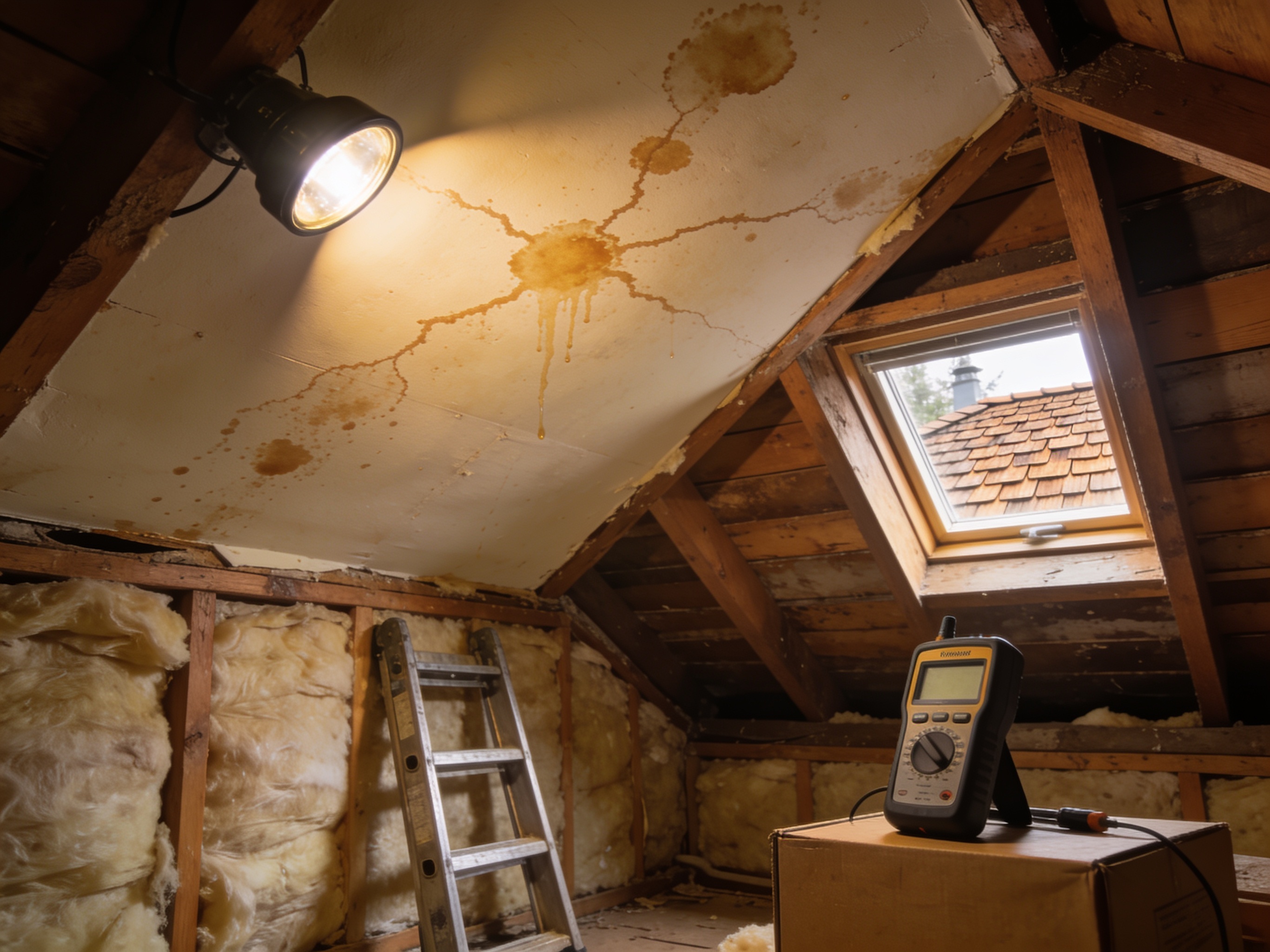
Attic water stains in Bellingham homes usually originate from roof penetrations directly above or up-slope from the mark, with water traveling along rafters or sheathing for several feet before dripping down. Start by mapping the stain location relative to roof features like chimneys, vents, or skylights common in neighborhoods such as Sehome and York. This initial alignment narrows the search before any exterior work begins.
Map the Stain Location Against Roof Features
Begin inside the attic by marking the center of each water stain with tape or chalk. Measure the distance from the stain to the nearest roof ridge or eave, then note any plumbing stacks, skylights, or valleys overhead. In homes built before 1970 around Downtown Bellingham and Cornwall Park, rafters often run at irregular angles that let water migrate 8–15 feet laterally. Compare these interior marks to the exterior roof plane visible from ground level. This mapping prevents unnecessary removal of insulation or drywall while revealing the true entry point. Older homes near Western Washington University frequently show stains that align with original flashing details rather than modern additions.
Account for Water Travel in Local Housing Stock
Water rarely drips straight down in Bellingham's older single-story and split-level homes. Instead it follows the underside of roof sheathing or along rafter bottoms until it reaches a low point. Check for darkened plywood or rusted nail heads in a 6-foot radius around the stain, especially in Fairhaven and Happy Valley where many roofs date to the 1950s and 1960s. Note any areas where insulation appears compressed or discolored, as these indicate repeated wetting. In Whatcom County, the combination of frequent light rain and occasional wind-driven storms allows moisture to move farther before evaporating, so inspect both the stained bay and the next two bays upslope.
Factor in Seasonal Weather and Nearby Terrain
Mild, wet winters near the Canadian border mean roofs stay damp for weeks, increasing the chance that stains appear weeks after the actual leak starts. Homes in Barkley and near Boulevard Park often sit on slopes that direct runoff toward one side of the roof, concentrating wear at valleys and gutters. After a hard rain, return to the attic with a flashlight and look for fresh drips or darkened trails that were not visible during drier periods. Compare findings against patterns described in Why Does My Roof Leak When It Rains Hard (But Not in Light Rain)? to understand how wind and volume change water paths. Terrain near Whatcom Falls Park can also funnel fog and mist under eaves, creating secondary moisture sources that mimic roof leaks.
Use Targeted Exterior Checks and Professional Tools
Once interior mapping is complete, move outside and examine the corresponding roof section for lifted shingles, cracked flashing, or clogged valleys. In neighborhoods like York and Sehome, moss buildup along the north-facing slopes often conceals small openings until water testing is performed. A moisture meter or infrared camera helps confirm active leaks without invasive probing. When stains appear near skylights or plumbing vents common on homes in Ferndale and Lynden, focus first on the sealant rings and step flashing. For complex cases involving multiple layers or metal transitions, schedule a Roof Leak Detection & Inspection that includes both attic and exterior evaluation. Readers can also review the Bellingham Seasonal Roof Maintenance Checklist (Spring/Fall) for ongoing inspection habits that reduce surprise stains.